KASIRKU Application Design with Mobile on Management Transaction, Stock and Sales Report
DOI:
https://doi.org/10.51903/dsd2w714Keywords:
Cashier, QR Scan, Store Management, MobileAbstract
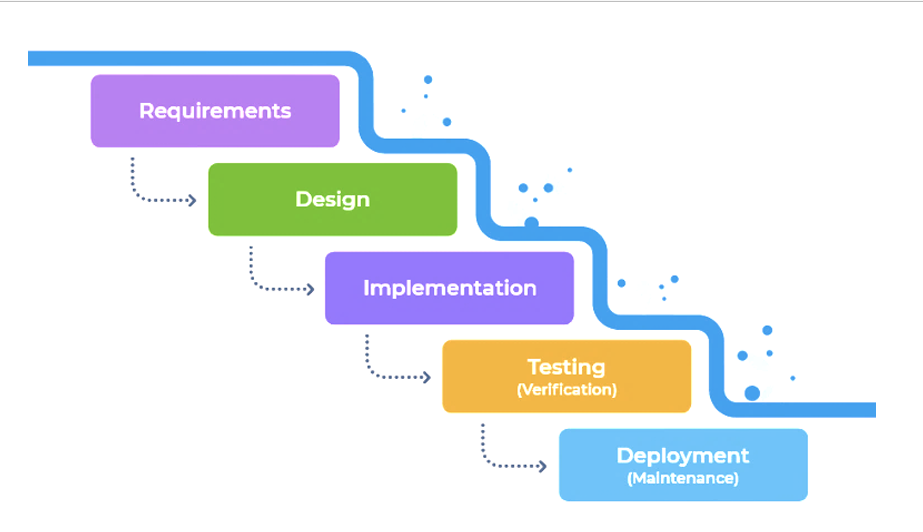
The development of technology in the retail world drives the need to create more efficient solutions in transaction management and stock of goods. Kasirku is a web-based cashier application designed for small and medium-sized stores. This application provides three main features, namely Transactions, Stock Items, and Sales Reports, with additional additional transaction features, discounts, taxes, add items, and QR scanners to simplify store operations. The Transaction feature assists users in recording sales efficiently, complete with options for adding items, applying discounts, and automatic tax calculation. The Stock Item feature allows store owners to monitor stock items in real-time, reducing the risk of out-of-stocks or recording errors. Sales Reports available in various formats, such as PDF or Excel, help store owners conduct more in-depth sales analysis. The development of the Kasirku application was conducted using the waterfall approach, which includes several steps: requirements analysis, design, implementation, and testing. The results of the testing process show that this application can increase efficiency in recording transactions, minimize errors in stock management, and produce precise reports. The QR Scan feature is proven to speed up the item input process when the store is busy, providing additional flexibility to users. This app has successfully become a reliable solution for store owners to manage their stores more easily and quickly.
References
R. H. I. Refan Pahatsyah Iswitama, Patmi Kasih, “Sistem Pencatatan Barang Pada Toko Hesti Menggunakan Algoritma FIFO Berbasis Web,” Seminar Nasional Teknologi & Sains (STAINS), vol. 3, no. 1, pp. 324–330, 2024.
R. R. Syepry Maulana, “Analisis Sistem Accurate Untuk Mengelola Data Penjualan Studi Kasus PT. Betomix Nusantara Lestari,” Jurnal Informatika, vol. 4, no. 2, pp. 134–139, 2020.
H. J. Lianghao Tan, Shubing Liu, Jing Gao, Xiaoyi Liu, “Enhanced Self-Checkout System for Retail Based on Improved YOLOv10.,” Journal of Imaging, vol. 10, no. 10, 2024.
N. Ö. Daniel Tolstoy, Emilia Rovira Nordman, Sara Melén Hånell, “The development of international e-commerce in retail SMEs: An effectuation perspective,” Journal of World Business, vol. 56, no. 2, 2021.
N. R. S. Tonya Boone, Ram Ganeshan, Aditya Jain, “Forecasting sales in the supply chain: Consumer analytics in the big data era,” International Journal of Forecasting, vol. 35, no. 1, 2019.
A. A. Shashwat Agrawal, Venkata Ramanaiah Chintha, Vishesh Narendra Pamadi, “The Role of Predictive Analytics in Inventory Management,” Universal Research Report, vol. 10, no. 4, 2023.
K. A. D. Nalaka Ruwan Dissanayake, “Web-based Applications: Extending the General Perspective of the Service of Web,” Conference: 10th International Research Conference of KDU (KDU-IRC 2017) on Changing Dynamics in the Global Environment: Challenges and Opportunities At: Rathmalana, Sri Lanka, 2017.
A. I. Khairul Hafidz, “The Android-Based Cashier Service Information System Utilizes the Waterfall Method,” Journal of Information Systems and Informatics, vol. 6, no. 2, 2024.
D. P. Beata Świecka, Paweł Terefenko, “Transaction factors’ influence on the choice of payment by Polish consumers,” Journal of Retailing and Consumer Services, vol. 58, 2021.
A. F. Paulo Rita, Tiago Oliveira, “The impact of e-service quality and customer satisfaction on customer behavior in online shopping,” Heliyon, vol. 5, 2019.
S. M. A. Minimol Anil Job, “A Software Engineering Approach in Design and Development of a Mobile Application,” International Journal of Engineering Trends and Technology, vol. 69, no. 5, pp. 32–40, 2021.
C. W. Annika Hinze, Nicholas Vanderschantz, Claire Timpany, Sally Jo Cunningham, Sarah Jane Saravani, “A Study of Mobile App Use for Teaching and Research in Higher Education,” Technology, Knowledge and Learning, vol. 28, no. 2, 2023.
K. B. Léon Wiederkehr, Jeremy Pitt, Thomas Dannhauser, “Attention Enhancing Technology: A New Dimension in the Design of Effective Wellbeing Apps,” IEEE Transactions on Technology and Society, vol. 2, no. 3, 2021.
D. Wilde, “Design Research Education and Global Concerns,” She Ji: The Journal of Design, Economics, and Innovation, vol. 6, no. 2, pp. 170–212, 2020.
J. R. L. Annika Wiecek, Daniel Wentzel, “The aesthetic fidelity effect,” International Journal of Research in Marketing, vol. 36, no. 4, pp. 542–557, 2019.
K. Dorst, “Design beyond Design,” She Ji: The Journal of Design, Economics, and Innovation, vol. 5, no. 2, pp. 117–127, 2019.
A. A. Gasparini, “Perspective and Use of Empathy in Design Thinking,” Conference: Advancements in Computer-Human Interaction, ACHI 2015, 2015.
M. Algarni, “An Extra Security Measurement for Android Mobile Applications Using the Fingerprint Authentication Methodology,” Journal of Information Security and Cybercrimes Research, vol. 6, no. 2, pp. 139–149, 2023.
B. R. Abdulbasit ALazzawi, Qahtan M.Yas, “A Comprehensive Review of Software Development Life Cycle methodologies: Pros, Cons, and Future Directions,” Iraqi Journal for Computer Science and Mathematics, vol. 4, no. 4, pp. 173–190, 2023.
F. G. de O. N. Rashidah Kasauli, Eric Knauss, Jennifer Horkoff, Grischa Liebel, “Requirements engineering challenges and practices in large-scale agile system development,” Journal of Systems and Software, vol. 172, 2021.
P. A.-V. Mayra Carrión-Toro, Jose Aguilar , Marco Santórum, María Pérez, Boris Astudillo, Cindy-Pamela Lopez, Marcelo Nieto, “iKeyCriteria: A Qualitative and Quantitative Analysis Methodto Infer Key Criteria since a Systematic Literature Reviewfor the Computing Domain,” Data, vol. 7, no. 6, 2022.
Downloads
Published
Issue
Section
License
All articles published in this journal are open access and licensed under the terms of the Creative Commons Attribution-ShareAlike 4.0 International License (CC BY-SA 4.0).
Under this license:
-
Authors retain copyright of their work.
-
Others are free to:
-
Share — copy and redistribute the material in any medium or format;
-
Adapt — remix, transform, and build upon the material for any purpose, even commercially;
-
-
As long as they:
-
Give appropriate credit to the original author(s) and the source;
-
Provide a link to the license;
-
Indicate if changes were made;
-
Distribute their contributions under the same license as the original.
-
This ensures that derivative works will also remain free and open under the same terms.