Vision of Social-Based Robotics: Leveraging Computer Data and Social Media for Adaptive Industrial Robotics
DOI:
https://doi.org/10.51903/pt4vff36Keywords:
Adaptive Robotics, Machine Learning, Human-Robot InteractionAbstract
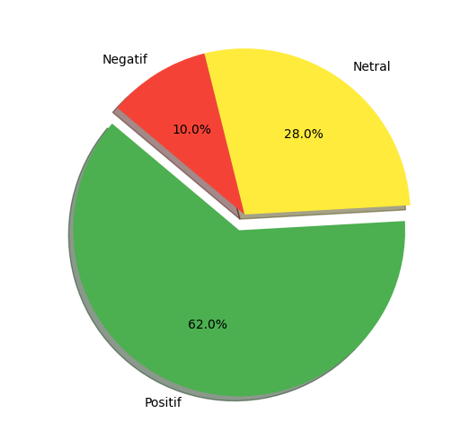
The rapid evolution of industrial robotics has been significantly influenced by the integration of computational data and social media, enabling robots to become more adaptive and responsive in collaborative work environments. This study investigates the role of social media and computational data in enhancing the adaptability of industrial robotics by applying machine learning techniques. By integrating sentiment analysis from social media with sensor data from industrial robots, this study examines how real-time data functions can improve robot decision-making and human-robot collaboration. Experimental results show a 23% increase in operational efficiency, an 89% accuracy rate in social interaction classification, and a 15% reduction in prediction errors. Furthermore, 62% of public sentiment toward adaptive robots is positive, highlighting the growing acceptance despite concerns over the impact of automation on jobs. These findings suggest that leveraging social media and computational data can significantly enhance the adaptability of robots, leading to a more efficient and socially conscious industrial ecosystem.
References
Bekbolatova, M., Mayer, J., Ong, C. W., & Toma, M. (2024). Transformative Potential of AI in Healthcare: Definitions, Applications, and Navigating the Ethical Landscape and Public Perspectives. Healthcare, 12(2), 125. https://doi.org/10.3390/healthcare12020125
Callarisa-Fiol, L. J., Moliner-Tena, M. Á., Rodríguez-Artola, R., & Sánchez-García, J. (2023). Entrepreneurship innovation using social robots in tourism: a social listening study. Review of Managerial Science, 17, 2945–2971. https://doi.org/10.1007/s11846-023-00646-9
Dwivedi, Y. K., Ismagilova, E., Rana, N. P., & Raman, R. (2021). Social Media Adoption, Usage And Impact In Business-To-Business (B2B) Context: A State-Of-The-Art Literature Review. Information Systems Frontiers, 25, 971–993. https://doi.org/10.1007/s10796-021-10106-y
Feng, Z., Wei, Z., Chen, X., Yang, H., Zhang, Q., & Zhang, P. (2021). Joint Communication, Sensing, and Computation Enabled 6G Intelligent Machine System. IEEE Network, 35(6), 34–42. https://doi.org/10.1109/MNET.121.2100320
Hua, X., Li, H., Zeng, J., Han, C., Chen, T., Tang, L., & Luo, Y. (2023). A Review of Target Recognition Technology for Fruit Picking Robots: From Digital Image Processing to Deep Learning. Applied Sciences 2023, Vol. 13, Page 4160, 13(7), 4160. https://doi.org/10.3390/APP13074160
Kabalisa, R., & Altmann, J. (2021). AI Technologies and Motives for AI Adoption by Countries and Firms: A Systematic Literature Review. Lecture Notes in Computer Science (Including Subseries Lecture Notes in Artificial Intelligence and Lecture Notes in Bioinformatics), 13072 LNCS, 39–51. https://doi.org/10.1007/978-3-030-92916-9_4/TABLES/2
Kabir, H., Tham, M. L., & Chang, Y. C. (2023). Internet of robotic things for mobile robots: Concepts, technologies, challenges, applications, and future directions. Digital Communications and Networks, 9(6), 1265–1290. https://doi.org/10.1016/j.dcan.2023.05.006
Kondratenko, Y., Atamanyuk, I., Sidenko, I., Kondratenko, G., & Sichevskyi, S. (2022). Machine Learning Techniques for Increasing Efficiency of the Robot’s Sensor and Control Information Processing. Sensors, 22(3), 1062. https://doi.org/10.3390/s22031062
Li, F., Larimo, J., & Leonidou, L. C. (2023). Social media in marketing research: Theoretical bases, methodological aspects, and thematic focus. Psychology & Marketing, 40(1), 124–145. https://doi.org/10.1002/mar.21746
Lim, M. S. C., Molenaar, A., Brennan, L., Reid, M., & McCaffrey, T. (2022). Young Adults’ Use of Different Social Media Platforms for Health Information: Insights From Web-Based Conversations. Journal of Medical Internet Research, 24(1), e23656. https://doi.org/10.2196/23656
Lim, V., Rooksby, M., & Cross, E. S. (2021). Social Robots on a Global Stage: Establishing a Role for Culture During Human–Robot Interaction. International Journal of Social Robotics, 13, 1307–1333. https://doi.org/10.1007/s12369-020-00710-4
Liu, R., Gupta, S., & Patel, P. (2023). The Application of the Principles of Responsible AI on Social Media Marketing for Digital Health. Information Systems Frontiers, 25, 2275–2299. https://doi.org/10.1007/s10796-021-10191-z
Mohamed, S. A., Mahmoud, M. A., Mahdi, M. N., & Mostafa, S. A. (2022). Improving Efficiency and Effectiveness of Robotic Process Automation in Human Resource Management. Sustainability, 14(7), 3920. https://doi.org/10.3390/su14073920
Nagy, M., Lăzăroiu, G., & Valaskova, K. (2023). Machine Intelligence and Autonomous Robotic Technologies in the Corporate Context of SMEs: Deep Learning and Virtual Simulation Algorithms, Cyber-Physical Production Networks, and Industry 4.0-Based Manufacturing Systems. Applied Sciences, 13(3), 1681. https://doi.org/10.3390/app13031681
Proia, S., Carli, R., Cavone, G., & Dotoli, M. (2022). Control Techniques for Safe, Ergonomic, and Efficient Human-Robot Collaboration in the Digital Industry: A Survey. IEEE Transactions on Automation Science and Engineering, 19(3), 1798–1819. https://doi.org/10.1109/TASE.2021.3131011
Robinson, N., Tidd, B., Campbell, D., Kulić, D., & Corke, P. (2023). Robotic Vision for Human-Robot Interaction and Collaboration: A Survey and Systematic Review. ACM Transactions on Human-Robot Interaction, 12(1). https://doi.org/10.1145/3570731
Sanchez-Cubillo, J., Del Ser, J., & Martin, J. L. (2024). Toward Fully Automated Inspection of Critical Assets Supported by Autonomous Mobile Robots, Vision Sensors, and Artificial Intelligence. Sensors, 24(12), 3721. https://doi.org/10.3390/s24123721
Seo, K. H., & Lee, J. H. (2021). The Emergence of Service Robots at Restaurants: Integrating Trust, Perceived Risk, and Satisfaction. Sustainability, 13(8), 4431. https://doi.org/10.3390/su13084431
Shah, T. R., Kautish, P., & Mehmood, K. (2023). Influence of robots service quality on customers’ acceptance in restaurants. Asia Pacific Journal of Marketing and Logistics, 35(12), 3117–3137. https://doi.org/10.1108/APJML-09-2022-0780
Stączek, P., Pizoń, J., Danilczuk, W., & Gola, A. (2021). A Digital Twin Approach for the Improvement of an Autonomous Mobile Robots (AMR’s) Operating Environment—A Case Study. Sensors, 21(23), 7830. https://doi.org/10.3390/s21237830
Talamali, M. S., Saha, A., Marshall, J. A. R., & Reina, A. (2021). When less is more: Robot swarms adapt better to changes with constrained communication. Science Robotics, 6(56). https://doi.org/10.1126/scirobotics.abf1416
Tantawi, K., Fidan, I., Huseynov, O., Musa, Y., & Tantawy, A. (2024). Advances in industry 4.0: from intelligentization to the industrial metaverse. International Journal on Interactive Design and Manufacturing, 1–12. https://doi.org/10.1007/s12008-024-01750-0
Torous, J., Bucci, S., Bell, I. H., Kessing, L. V., Faurholt-Jepsen, M., Whelan, P., Carvalho, A. F., Keshavan, M., Linardon, J., & Firth, J. (2021). The growing field of digital psychiatry: current evidence and the future of apps, social media, chatbots, and virtual reality. World Psychiatry, 20(3), 318–335. https://doi.org/10.1002/wps.20883
Villena, A., Hurtado, M. M., Gómez, C., Amor, G., Vega, A., & Morales-Asencio, J. M. (2025). Users remain overlooked: Shared decision-making processes for people with anxiety disorders. Journal of Psychiatric and Mental Health Nursing, 32(1), 203–214. https://doi.org/10.1111/jpm.13095
Wang, S., Zhang, J., Wang, P., Law, J., Calinescu, R., & Mihaylova, L. (2024). A deep learning-enhanced Digital Twin framework for improving safety and reliability in human–robot collaborative manufacturing. Robotics and Computer-Integrated Manufacturing, 85, 102608. https://doi.org/10.1016/j.rcim.2023.102608
Zafar, M. H., Langås, E. F., & Sanfilippo, F. (2024). Exploring the synergies between collaborative robotics, digital twins, augmentation, and industry 5.0 for smart manufacturing: A state-of-the-art review. Robotics and Computer-Integrated Manufacturing, 89, 102769. https://doi.org/10.1016/j.rcim.2024.102769
Downloads
Published
Issue
Section
License
All articles published in this journal are open access and licensed under the terms of the Creative Commons Attribution-ShareAlike 4.0 International License (CC BY-SA 4.0).
Under this license:
-
Authors retain copyright of their work.
-
Others are free to:
-
Share — copy and redistribute the material in any medium or format;
-
Adapt — remix, transform, and build upon the material for any purpose, even commercially;
-
-
As long as they:
-
Give appropriate credit to the original author(s) and the source;
-
Provide a link to the license;
-
Indicate if changes were made;
-
Distribute their contributions under the same license as the original.
-
This ensures that derivative works will also remain free and open under the same terms.