The Impact of Digital Burnout on Organizational Citizenship Behavior (OCB) among Remote Workers
DOI:
https://doi.org/10.51903/6j0mr862Keywords:
Digital Burnout, Organizational Citizenship Behavior (OCB), Remote Workers, Remote Work, Digital SectorAbstract
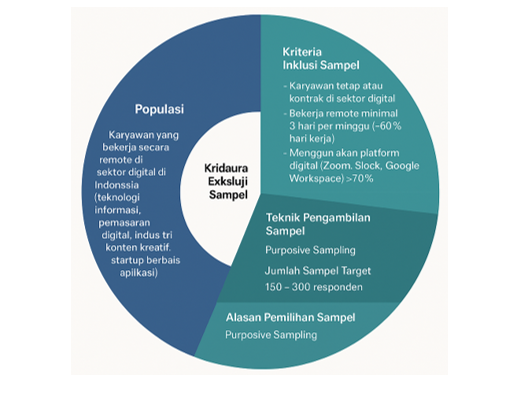
The development of digital technology has transformed the work landscape, especially with the increasing prevalence of remote work systems in Indonesia’s digital sector. However, the high intensity of technology use in the remote work context also poses the risk of digital burnout, which is mental and emotional exhaustion due to excessive exposure to technological demands. This phenomenon potentially affects employee behavior, including extra-role behaviors known as Organizational Citizenship Behavior (OCB). This study aims to explore the relationship between digital burnout and OCB among remote workers in the digital sector, while also understanding how technological pressure influences work dynamics and employee contributions beyond formal tasks. The research method uses a quantitative approach with purposive sampling technique, targeting 150 to 300 remote workers who work at least three days per week and heavily rely on digital platforms such as Zoom, Slack, and Google Workspace in their daily activities. Data were collected through online surveys and analyzed using SmartPLS to test the relationships between variables with Partial Least Squares Structural Equation Modeling (PLS-SEM). The results indicate that although digital burnout is quite prevalent, employees still demonstrate positive OCB, indicating the presence of adaptation mechanisms and strong organizational commitment. These findings enrich the understanding of how remote workers manage technological pressure while maintaining extra contributions in a dynamic digital work environment. The contribution of this study lies in providing new insights into the interaction between digital burnout and OCB in the digital work era, as well as practical implications for human resource management in designing strategies to support the well-being and productivity of remote employees. This study encourages the development of more humane and sustainable work policies in facing the challenges of digital transformation.
References
Al Mulhim, E. N. (2023). Technology Fatigue During the Covid-19 Pandemic: the Case of Distance Project-Based Learning Environments. Turkish Online Journal of Distance Education, 24(1), 234–245. https://doi.org/10.17718/tojde.1034006
Aqham, A. A., Endaryati, E., Subroto, V. K., & Kusumajaya, R. A. (2024). Behavioral Biases in Investment Decisions : A Mixed-Methods Study on Retail Investors in Emerging Markets. 3(3), 568–586.
Asatiani, A., & Norström, L. (2023). Information systems for sustainable remote workplaces. Journal of Strategic Information Systems, 32(3). https://doi.org/10.1016/j.jsis.2023.101789
Beeson, D., Wolffsohn, J. S., Baigum, T., Qureshi, T., Gohil, S., Wahid, R., & Sheppard, A. L. (2024). Digital eye strain symptoms worsen during prolonged digital tasks, associated with a reduction in productivity. Computers in Human Behavior Reports, 16(September), 100489. https://doi.org/10.1016/j.chbr.2024.100489
Choi, J. (2024). Does Foodservice Employees’ Burnout Influence Their In-role and Extra-role Food Safety Behaviors? A Structural Modeling Approach. Journal of Food Protection, 87(1), 100200. https://doi.org/10.1016/j.jfp.2023.100200
Health, M. (2025). EC PSYCHOLOGY AND PSYCHIATRY Research Article Digital Burnout: The Effect of Screen Workloads on Mental Health and Quality of Life. 3, 1–14. https://doi.org/10.31080/ECPP.2025.14.01149
Hsieh, C. C., Li, H. C., Liang, J. K., & Chiu, Y. C. (2024). Empowering teachers through principals’ emotional intelligence: Unlocking the potential of organizational citizenship behavior in Taiwan’s elementary schools. Acta Psychologica, 243(48), 104142. https://doi.org/10.1016/j.actpsy.2024.104142
Kelty, S. F., McQueen, E., Pymont, C., & Green, N. (2021). Avoiding Burnout at the Digital Forensics Coalface: Targeted strategies for forensic agencies in the management of job-related stress. Forensic Science International: Digital Investigation, 38, 301127. https://doi.org/10.1016/j.fsidi.2021.301127
Koporcic, N., Francu, R. E., Gugenishvili, I., & Nietola, M. (2025). Exiting the space between the rock and the hard place: An integrative managerial approach to tackling burnout in a business context. Industrial Marketing Management, 126(February), 44–55. https://doi.org/10.1016/j.indmarman.2025.02.006
Marsh, E., Vallejos, E. P., & Spence, A. (2022). The digital workplace and its dark side: An integrative review. Computers in Human Behavior, 128, 107118. https://doi.org/10.1016/j.chb.2021.107118
Nawaz, S. (2024). Distinguishing between effectual, ineffectual, and problematic smartphone use: A comprehensive review and conceptual pathways model for future research. Computers in Human Behavior Reports, 14(May), 100424. https://doi.org/10.1016/j.chbr.2024.100424
Nitoslawski, S. A., Wong-Stevens, K., Steenberg, J. W. N., Witherspoon, K., Nesbitt, L., & Konijnendijk van den Bosch, C. C. (2021). The Digital Forest: Mapping a Decade of Knowledge on Technological Applications for Forest Ecosystems. Earth’s Future, 9(8), 1–28. https://doi.org/10.1029/2021EF002123
Nobles, C. (2022). Stress, Burnout, and Security Fatigue in Cybersecurity: A Human Factors Problem. HOLISTICA – Journal of Business and Public Administration, 13(1), 49–72. https://doi.org/10.2478/hjbpa-2022-0003
Olsson, L. F., Glandorf, H. L., Black, J. F., Jeggo, R. E. K., Stanford, J. R., Drew, K. L., & Madigan, D. J. (2025). A multi-sample examination of the relationship between athlete burnout and sport performance. Psychology of Sport and Exercise, 76(September 2024), 102747. https://doi.org/10.1016/j.psychsport.2024.102747
Qiao, S., Denny, P., & Giacaman, N. (2024). Oversight in Action: Experiences with Instructor-Moderated LLM Responses in an Online Discussion Forum. 95–104. https://doi.org/10.1145/3716640.3716651
Rainoldi, M., Ladkin, A., & Buhalis, D. (2025). Digital nomads’ work-leisure management practices. Annals of Tourism Research, 111(February 2024), 103904. https://doi.org/10.1016/j.annals.2025.103904
Righi, E., Mirandola, M., Mazzaferri, F., Dossi, G., Razzaboni, E., Zaffagnini, A., Ivaldi, F., Visentin, A., Lambertenghi, L., Arena, C., Micheletto, C., Gibellini, D., & Tacconelli, E. (2022). Determinants of persistence of symptoms and impact on physical and mental wellbeing in Long COVID: A prospective cohort study. Journal of Infection, 84(4), 566–572. https://doi.org/10.1016/j.jinf.2022.02.003
Sanjeeva Kumar, P. (2024). TECHNOSTRESS: A comprehensive literature review on dimensions, impacts, and management strategies. Computers in Human Behavior Reports, 16(August), 100475. https://doi.org/10.1016/j.chbr.2024.100475
Singh, P., Bala, H., Dey, B. L., & Filieri, R. (2022). Enforced remote working: The impact of digital platform-induced stress and remote working experience on technology exhaustion and subjective wellbeing. Journal of Business Research, 151(June), 269–286. https://doi.org/10.1016/j.jbusres.2022.07.002
Susanto, E., Holili, M. H., & Manalu, G. (2024). Supplier Relationship Management in the Digital Age : Enhancing Supply Chain Resilience Through Blockchain Technology. 3(3), 511–530.
Vapur, M., & Dere, G. (2025). The Mediating Role of Citizenship Fatigue in The Effect of Job Stress on Burnout : A Research on Private Sports Center Employees. 1, 47–64.
Wardi, A., Fitriani, N., Purwanti, K., Saipudin, A., & Rasminto, H. (2024). Impact of Diversity and Inclusion Policies on Organizational Performance in Multinational Companies : A Quantitative Analysis. 3(3), 549–567.
Xia, L., Baghaie, S., & Mohammad Sajadi, S. (2024). The digital economy: Challenges and opportunities in the new era of technology and electronic communications. Ain Shams Engineering Journal, 15(2), 102411. https://doi.org/10.1016/j.asej.2023.102411
Xie, W., & Yang, R. (2025). Exploring the influence of individual digitalization on technostress in Chinese IT remote workers: The mediating role of Information Processing demands and the Job Complexity. Acta Psychologica, 255(September 2024), 104882. https://doi.org/10.1016/j.actpsy.2025.104882
Yang, L., Murad, M., Mirza, F., Chaudhary, N. I., & Saeed, M. (2022). Shadow of cyber ostracism over remote environment: Implication on remote work challenges, virtual work environment and employee mental well-being during a Covid-19 pandemic. Acta Psychologica, 225(January), 103552. https://doi.org/10.1016/j.actpsy.2022.103552
Downloads
Published
Issue
Section
License
Copyright (c) 2025 Aliah Nurhayati, Shidqi Zamzami, Lia Nur Jannah

This work is licensed under a Creative Commons Attribution-ShareAlike 4.0 International License.