Adoption of Generative AI in Business Decision-Making: Opportunities, Risks, and Strategic Readiness in Emerging Markets
DOI:
https://doi.org/10.51903/jf7z6s73Keywords:
Generative AI, business decision-making, organizational readiness, risk management, developing countriesAbstract
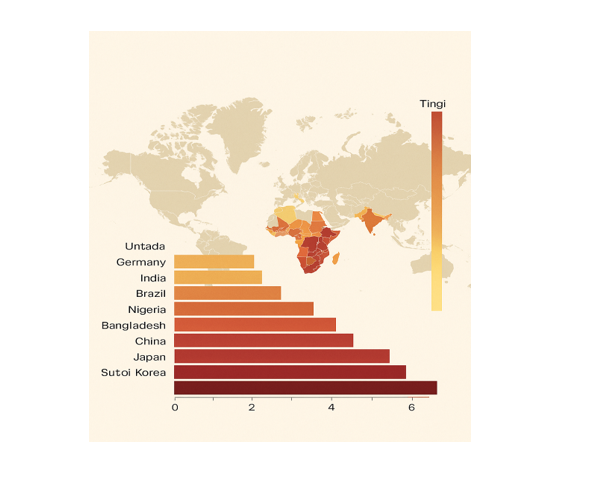
The rapid evolution of Generative AI has opened up numerous possibilities to enhance organizational decision-making through improved operational efficiency, innovation, and data analysis accuracy. However, companies in developing countries face challenges such as underdeveloped digital infrastructure, labor shortages, data security risks, and regulatory uncertainty. These factors create a gap between theoretical benefits and practical implementation. This study explores opportunities, key risks, and organizational readiness for Generative AI adoption in business decision-making within developing countries. Using a mixed-method sequential design, phase I involved a quantitative survey of 120 companies across five nations, while phase II included interviews with 15 key informants. Data were analyzed using Structural Equation Modeling and NVivo, with interactive visualization aiding in framework development. Findings indicate that Generative AI could improve decision-making efficiency by 89% and reduce operational costs by 15%. Top risks include data security (score: 4.41) and regulatory ambiguity (score: 4.27). Organizational readiness was high in managerial support (score: 4.01) but low in internal regulation (score: 3.67). The proposed Strategic Generative AI Adoption Framework integrates innovation diffusion, risk management, and readiness, offering practical insights for adaptive AI adoption in developing countries.
References
L. Kambili, “Generative AI in Strategic Business Planning : Boosting Efficiency and Competitive Advantage in Business Organizations,” vol. 25, no. 3, pp. 67–76, 2025.
R. Babalghaith and A. Aljarallah, “Factors Affecting Big Data Analytics Adoption in Small and Medium Enterprises,” Inf. Syst. Front., vol. 26, no. 6, pp. 2165–2187, 2024, doi: 10.1007/s10796-024-10538-2.
T. Butler, A. Espinoza-Limón, and S. Seppälä, “Towards a capability assessment model for the comprehension and adoption of AI in organisations,” J. AI, Robot. Work. Autom., vol. 1, no. 1, p. 18, 2021, doi: 10.69554/kljj4414.
N. Rane, S. P. Choudhary, and J. Rane, “Acceptance of artificial intelligence: key factors, challenges, and implementation strategies,” J. Appl. Artif. Intell., vol. 5, no. 2, pp. 50–70, 2024, doi: 10.48185/jaai.v5i2.1017.
N. R. Mannuru et al., “Artificial intelligence in developing countries: The impact of generative artificial intelligence (AI) technologies for development,” Inf. Dev., no. September, 2023, doi: 10.1177/02666669231200628.
R. Biloslavo, D. Edgar, E. Aydin, and C. Bulut, “Artificial intelligence (AI) and strategic planning process within VUCA environments: a research agenda and guidelines,” Manag. Decis., 2024, doi: 10.1108/MD-10-2023-1944.
B. W. Susilo and E. Susanto, “Employing Artificial Intelligence in Management Information Systems to Improve Business Efficiency,” vol. 3, no. 2, pp. 212–229, 2024.
F. A. Csaszar, H. Ketkar, and H. Kim, “Artificial Intelligence and Strategic Decision-Making: Evidence from Entrepreneurs and Investors,” 2024, doi: 10.1287/stsc.2024.0190.
T. Hargyatni, K. D. Purnama, and G. Aninditiyah, “Impact Analysis of Artificial Intelligence Utilization in Enhancing Business Decision-Making in the Financial Sector,” vol. 3, no. 2, pp. 282–296, 2024.
I. Hermawan and S. Suharnomo, “Information Technology as a Strategic Resource in Encouraging Organizational Change Readiness through the Role of the Human Capital Effectiveness,” J. Din. Manaj., vol. 11, no. 2, pp. 242–254, 2020, doi: 10.15294/jdm.v11i2.23700.
D. Maia et al., “The Impact of Generative AI on IT Professionals’ Work Routines: A Systematic Literature Review,” Int. Conf. Comput. Support. Educ. CSEDU - Proc., vol. 2, no. April, pp. 163–173, 2025, doi: 10.5220/0013473100003932.
T. Sumarlin and R. A. Kusumajaya, “AI Challenges and Strategies for Business Process Optimization in Industry 4 . 0 : Systematic Literature Review,” vol. 3, no. 02, pp. 195–211, 2024.
J. Füller, Z. Tekic, and K. Hutter, “Rethinking Innovation Management—How AI Is Changing the Way We Innovate,” J. Appl. Behav. Sci., 2024, doi: 10.1177/00218863241287323.
O. Lopez-Solis, A. Luzuriaga-Jaramillo, M. Bedoya-Jara, J. Naranjo-Santamaría, D. Bonilla-Jurado, and P. Acosta-Vargas, “Effect of Generative Artificial Intelligence on Strategic Decision-Making in Entrepreneurial Business Initiatives: A Systematic Literature Review,” Adm. Sci., vol. 15, no. 2, pp. 1–25, 2025, doi: 10.3390/admsci15020066.
R. Adolph, “Adoption and Implementation of Artificial Intelligence in Small Businesses in Selected Developing Countries,” vol. 8, no. 1, pp. 1–23, 2024.
R. A. Lipcsey, “AI Diffusion to Low-Middle Income Countries A Blessing or a Curse ?,” 2024.
M. S. Sakit, “REGULATING AI IN FINANCIAL SERVICES : LEGAL FRAMEWORKS AND,” vol. 08, no. 358, 2024, doi: 10.30546/2218-9130.026.2024.254.
G. Perez, S. Popadiuk, and A. M. R. V. C. Cesar, “Internal factors that favor the adoption of technological innovation defined by information systems: a study of the electronic health record,” RAI Rev. Adm. e Inovação, vol. 14, no. 1, pp. 67–78, 2017, doi: 10.1016/j.rai.2016.12.003.
J. Khalid, M. Chuanmin, F. Altaf, M. M. Shafqat, S. K. Khan, and M. U. Ashraf, “AI-Driven Risk Management and Sustainable Decision-Making: Role of Perceived Environmental Responsibility,” Sustain., vol. 16, no. 16, pp. 1–21, 2024, doi: 10.3390/su16166799.
V. C. Storey, W. T. Yue, J. L. Zhao, and R. Lukyanenko, “Generative Artificial Intelligence: Evolving Technology, Growing Societal Impact, and Opportunities for Information Systems Research,” Inf. Syst. Front., no. 0123456789, 2025, doi: 10.1007/s10796-025-10581-7.
P. Baena-Luna, J. A. Martínez-Román, J. E. Romero-García, and F. Liñán, “The influence of corporate entrepreneurship strategy on SMEs’ internationalization: proposing and testing a model,” J. Entrep. Emerg. Econ., vol. 17, no. 1, pp. 118–141, 2024, doi: 10.1108/JEEE-03-2024-0117.
E. Brynjolfsson, D. Li, and L. Raymond, “Generative Ai at Work,” SSRN Electron. J., 2023, doi: 10.2139/ssrn.4426942.
N. Pasipamire and A. Muroyiwa, “Navigating algorithm bias in AI: ensuring fairness and trust in Africa,” Front. Res. Metrics Anal., vol. 9, no. 2023, 2024, doi: 10.3389/frma.2024.1486600.
M. Safi, F. Abdallah, A. Erturk, and R. Alkhayyat, “Digital Readiness of the Workforce for Successful Digital Transformation: Exploring New Digital Competencies,” p. 21, 2024, doi: 10.3390/proceedings2024101021.
S. Badghish and Y. A. Soomro, “Artificial Intelligence Adoption by SMEs to Achieve Sustainable Business Performance: Application of Technology–Organization–Environment Framework,” Sustain. , vol. 16, no. 5, 2024, doi: 10.3390/su16051864.
A. E. Youssef, “A framework for cloud security risk management based on the business objectives of organizations,” Int. J. Adv. Comput. Sci. Appl., vol. 10, no. 12, pp. 186–194, 2019, doi: 10.14569/ijacsa.2019.0101226.
O. Ali, P. A. Murray, S. Muhammed, Y. K. Dwivedi, and S. Rashiti, “Journal of Innovation,” vol. 7, 2022, doi: 10.1016/j.jik.2022.100213.
Emilio ferrara et al, “F Airness and B Ias in a Rtificial I Ntelligence : a B Rief S Urvey of S Ources , I Mpacts , and M Itigation”.
K. Jamil, W. Zhang, A. Anwar, and S. Mustafa, “Exploring the Influence of AI Adoption and Technological Readiness on Sustainable Performance in Pakistani Export Sector Manufacturing Small and Medium-Sized Enterprises,” Sustain., vol. 17, no. 8, 2025, doi: 10.3390/su17083599.
J. A. Restrepo-Morales, J. A. Ararat-Herrera, D. A. López-Cadavid, and A. Camacho-Vargas, “Breaking the digitalization barrier for SMEs: a fuzzy logic approach to overcoming challenges in business transformation,” J. Innov. Entrep., vol. 13, no. 1, 2024, doi: 10.1186/s13731-024-00429-w.
V. N. Bhat, “Enterprise Digital Transformation : Leveraging AI / ML and Automation for Operational Excellence,” pp. 3537–3545, 2025.
Downloads
Published
Issue
Section
License
Copyright (c) 2025 Putri Sheila Maria Sabrina, Maria Mahdalina, Selvi Maria Anjani

This work is licensed under a Creative Commons Attribution-ShareAlike 4.0 International License.