The Impact of ESG (Environmental, Social, Governance) Initiatives on Investment Decisions in the Indonesian Capital Market
DOI:
https://doi.org/10.51903/rt9t5k70Keywords:
ESG, Investement Decision, Investor Perception, Governance, SEM-PLSAbstract
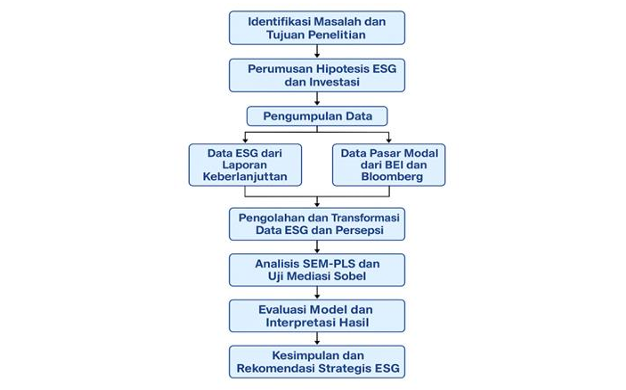
n recent years, Environmental, Social, and Governance (ESG) initiatives have sprouted into the front and center of both the global and national investment stage. In Indonesia, while the regulators and corporations have made their attempt in the promotion of ESG practices, how much such practices are construed to be influential in investment decisions remains ambiguous. Therefore, this study aims at providing an empirical study of the impact of ESG initiatives on investment decisions in the Indonesian capital market, evaluate which ESG dimension is most influential, and look at the mediating role of investor perception. This study adopts a quantitative explanatory approach, using Structural Equation Modeling based on Partial Least Squares (SEM-PLS), with an estimation of 135 firms' ESG data along with the perceptions of 200 investors. The findings indicate that ESG initiatives exert a significant influence on investment decisions, and governance is the most prominent factor. Moreover, it was found that investor perception has a considerable mediating role in the relationship between ESG and investment decisions. This study thus offers a new approach to the literature on ESG in Indonesia, as it integrates and contextualizes the results while emphasizing the key role of investor perception in sustainable investment decision-making.
References
Bongermino, G., & Romagnoli, S. (2025). ESG rating and ambiguity: an informative and distorted signal-based approach. Decisions in Economics and Finance. https://doi.org/10.1007/s10203-025-00507-y.
Chen, W., Xie, Z., & Huang, M. (2025). Corporate ESG performance and the capital market’s information environment: evidence from analysts’ forecasts. Journal of Applied Economics, 28(1). https://doi.org/10.1080/15140326.2024.2433770.
Cho, E. (2023). Time-varying preferences for ESG investments: evidence from an emerging market. Journal of Derivatives and Quantitative Studies, 31(2), 121–138. https://doi.org/10.1108/JDQS-11-2022-0025.
Dung, N. T. P., Anh, N. T. M., Toan, P. H., Hieu, L. T., Linh, N. T., & Hang, H. T. (2024). the Impact of Environmental, Social, and Governance Information on Individual Stock Investment Decisions. Risk Governance and Control: Financial Markets and Institutions, 14(2), 32–43. https://doi.org/10.22495/rgcv14i2p4.
Faruq, A. T. M. O., & Chowdhury, M. A. R. (2025). Financial Markets and ESG: How Big Data is Transforming Sustainable Investing in Developing countries.
Handoko, S., & Holili, M. H. (2024). The Integration of Environmental , Social , and Governance (ESG ) Metrics in Performance Evaluation : A Strategic Management Accounting Approach. 3(1).
Huang, Y. (2024). Assessing the Integration of Environmental, Social, and Governance (ESG) Factors in Sustainable Strategies: A Review of Progress in the Communications Industry. Advances in Economics, Management and Political Sciences, 88(1), 294–301. https://doi.org/10.54254/2754-1169/88/20241050.
Jasni, N. S., & Zulkifli, A. (2024). The moderating role of sector risk in the relationship between ESG and financial performance: Evidence from top companies in Malaysia. Edelweiss Applied Science and Technology, 8(2), 59–72. https://doi.org/10.55214/25768484.v8i2.672.
Kim, E. (2025). The Effect of Foreign Investors on ESG Investment Efficiency: Evidence from South Korea. Sustainability (Switzerland), 17(5). https://doi.org/10.3390/su17052267.
Kusumo, H. (2024). Corporate Governance and Firm Performance : The Role of Shareholder Activism in Emerging Markets. 3(3), 470–487.
Liou, J. J. H., Liu, P. Y. L., & Huang, S. W. (2023). Exploring the key barriers to ESG adoption in enterprises. Systems and Soft Computing, 5(April 2024). https://doi.org/10.1016/j.sasc.2023.200066.
Liu, H., Wei, S., & Zhang, J. (2023). Corporate Lobbying and ESG Reports: Patterns among US Companies, 1999-2017. Business and Politics, 293–314. https://doi.org/10.1017/bap.2023.10.
Liu, Z., Duan, X., Cheng, H., Liu, Z., Li, P., & Zhang, Y. (2023). Empowering High-Quality Development of the Chinese Sports Education Market in Light of the “Double Reduction” Policy: A Hybrid SWOT-AHP Analysis. Sustainability (Switzerland), 15(3). https://doi.org/10.3390/su15032107.
Makhija, P., Chacko, E., Kukreja, M., & Agarwal, S. (2023). Sustainable Investing with ESG - Variables Impacting Individual Investor Decisions. SDMIMD Journal of Management, 91–101. https://doi.org/10.18311/sdmimd/2023/32699.
Pasquino, M., & Lucarelli, C. (2024). Socially responsible investments inside out: a new conceptual framework for investigating retail investor preferences. International Journal of Bank Marketing, 43(3), 449–475. https://doi.org/10.1108/IJBM-02-2024-0077.
Pong, H. K., & Man, F. L. C. (2024). The Influence of Environmental, Social, and Governance (ESG) Perception on Investor Trust and Brand Relationship Quality: A Study Among Retail Investors in Hong Kong. Journal of Risk and Financial Management, 17(10). https://doi.org/10.3390/jrfm17100455.
Prasad, R., & Mondal, A. (2025). Nexus between ESG scores and financial performance: evidence from the Indian banking sector. Asian Journal of Accounting Research. https://doi.org/10.1108/AJAR-06-2024-0244.
Qu, W., & Su, Z. (2024). The Role of ESG Ratings in Shaping Chinese Investors’ Decision-Making Behavior: An Analysis from the Fund Signaling Perspective. Sustainability, 16(12), 4934. https://doi.org/10.3390/su16124934.
Reber, B., Gold, A., & Gold, S. (2022). ESG Disclosure and Idiosyncratic Risk in Initial Public Offerings. Journal of Business Ethics, 179(3), 867–886. https://doi.org/10.1007/s10551-021-04847-8.
Ringle, C. M., Sarstedt, M., Sinkovics, N., & Sinkovics, R. R. (2023). A perspective on using partial least squares structural equation modelling in data articles. Data in Brief, 48(April). https://doi.org/10.1016/j.dib.2023.109074.
Rounok, N., Qian, A., & Alam, M. A. (2023). The Effects of ESG issues on investment decision through corporate reputation: Individual investors’ perspective. International Journal of Research in Business and Social Science (2147- 4478), 12(2), 73–88. https://doi.org/10.20525/ijrbs.v12i2.2354.
Sriasih, S. D., Razak, F. A., & Ikhsan, H. (2025). AI-Driven Sentiment Analysis of Retail Investor Behavior during Market Volatility : A Study of Twitter Data in Southeast Asia. 4(1), 741–756. https://doi.org/10.51903/jmi.v4i1.179.
Wang, Y., Dong, Y., & Zhou, T. (2024). An Analysis of the Influence of Environmental , Social , and Governance ( ESG ) Factors on Multinational Investment Decision-Making. 5(3), 8–15..
Xiao, Q. (2024). ESG Disclosure, Institutional Investor Preferences and Firm Value. Frontiers in Business, Economics and Management, 13(3), 247–256. https://doi.org/10.54097/sj18nb28.
Zhang, L. Sen. (2025). The impact of ESG performance on the financial performance of companies: evidence from China’s Shanghai and Shenzhen A-share listed companies. Frontiers in Environmental Science, 13(February), 1–15. https://doi.org/10.3389/fenvs.2025.1507151.
Zhang, Y. (2024). ESG Perceptions: Investigating Investor Motivations and Characteristics. Financial Services Review, 32(2), 29–52. https://doi.org/10.61190/fsr.v32i2.3591.
Zhao, Y., Gao, Y., & Hong, D. (2024). Sustainable Innovation and Economic Resilience: Deciphering ESG Ratings’ Role in Lowering Debt Financing Costs. In Journal of the Knowledge Economy. Springer US. https://doi.org/10.1007/s13132-024-02129-y
Downloads
Published
Issue
Section
License
Copyright (c) 2025 Nikmah Kholida, Lin Hapsari, I'in Nurul Hikmah

This work is licensed under a Creative Commons Attribution-ShareAlike 4.0 International License.