Analisis Kelayakan Sistem Kompensasi Langsung pada Tenaga Pendidik di Sekolah TK Swasta ABD: Studi Kasus di Jakarta
DOI:
https://doi.org/10.51903/tn70ws13Keywords:
Direct Compensation System, Compensation feasibility, Work motivationAbstract
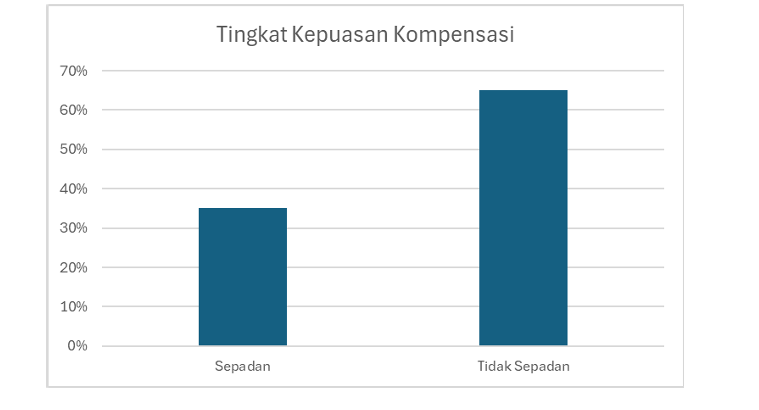
This study aims to analyze the feasibility of the direct compensation system applied to teaching staff at the ABD Private Kindergarten in Jakarta. The main focus is to assess whether the compensation system meets the principles of fairness, transparency, and alignment with teachers' workloads and responsibilities. A qualitative case study approach was employed, involving data collection through in-depth interviews with four educators, direct observations, and analysis of internal school documents. The findings reveal that the current compensation system fails to reflect teachers’ actual contributions and workload proportionately. The lack of objective performance evaluations and the absence of a structured salary increment mechanism were identified as key factors affecting work motivation. These results highlight the urgent need to reform compensation policies within early childhood education institutions. The study recommends the implementation of a more structured and transparent salary framework that considers years of service, educational background, and involvement in school activities. This research provides practical insights for private education stakeholders aiming to develop a more effective and sustainable compensation system that enhances both teacher welfare and educational quality.
References
R. W. Mondy and J. J. Martocchio, Human Resource Management, 14th ed. Pearson Education, 2016.
A. Pitriyani, Y. Sanda, S. N. Remi, Y. Yesepa, and W. G. Mulawarman, “Sistem Kompensasi dalam Menjamin Kesejahteraan Guru Honorer di Sekolah Menengah Pertama Negeri,” Jurnal Basicedu, vol. 6, no. 3, pp. 4004–4015, 2022, doi: 10.31004/basicedu.v6i3.2779.
K. Briliarto, “Pengaruh Kompensasi dan Kepuasan Kerja terhadap Kinerja Guru dengan Komitmen Organisasional sebagai Variabel Intervening (Studi pada Yayasan Perguruan Hamong Putera di Sleman),” Jurnal Studi Manajemen Organisasi, vol. 17, no. 2, pp. 1–7, 2022, doi: 10.14710/jsmo.v17i2.32076.
N. N. Septiana, Z. Khoiriyah, and R. Shaleh, “Metode penelitian studi kasus dalam pendekatan kualitatif,” Didaktik: Jurnal Ilmiah Pendidikan, vol. 10, no. 4, pp. 150–160, 2024, doi: 10.xxxx/didaktik.v10i4.2024.
M. Johnson and L. Roberts, “Compensation Strategies and Employee Performance: A Global Perspective,” International Journal of Human Resource Studies, vol. 10, no. 4, pp. 65–78, 2020, doi: 10.5296/ijhrs.v10i4.17859.
A. Rohman, I. Rindanigsih, and T. Churrahman, “Pengaruh Kompensasi Terhadap Kinerja Guru: Systematic Literature Review (SLR),” Academic Journal Research, vol. 1, no. 1, pp. 27–34, 2023, doi: 10.61796/acjoure.v1i1.14.
A. Wibowo, “Analisis Kepuasan Kerja Guru Honorer di Sekolah Negeri,” Jurnal Administrasi Pendidikan, vol. 13, no. 1, pp. 40–48, 2021.
L. Nurhasanah, “Analisis data kualitatif dalam studi kasus: Pendekatan sistematis,” Jurnal Metodologi Penelitian, vol. 15, no. 1, pp. 45–56, 2022, doi: 10.xxxx/jmp.v15i1.2022.
R. Yanuarsari, D. Y. Sari, dan I. Nurjanah, "Kinerja Guru PAUD dalam Mengimplementasikan Standar Tingkat Pencapaian Perkembangan Anak Usia Dini," Jurnal Pendidikan dan Kebudayaan (JURDIKBUD), vol. 2, no. 3, pp. 245–252, Nov. 2022.
N. A. F. Putri dan A. Rasyad, "Pengaruh Kompensasi, Lingkungan Kerja, dan Motivasi Kerja terhadap Kinerja Guru Tidak Tetap di PAUD Se-Kota Mataram," Jurnal Ilmiah Akuntansi Indonesia, vol. 7, no. 2, pp. 207–229, Nov. 2022.
H. Hamsal, N. Nurman, dan A. Razak, "Pengaruh Motivasi dan Kompensasi terhadap Kinerja Guru PAUD Se-Kecamatan Tambang Kabupaten Kampar," Management Studies and Entrepreneurship Journal, vol. 4, no. 1, pp. 1–10, 2022.
A. E. Putra, R. Hidayat, dan E. Sarimanah, "Peningkatan Kreativitas Kerja Guru Melalui Motivasi Kerja, Kepribadian, dan Kepemimpinan Visioner," Murhum: Jurnal Pendidikan Anak Usia Dini, vol. 4, no. 1, pp. 136–148, 2023.
S. P. Robbins and T. A. Judge, Organizational Behavior, 18th ed. Boston, MA: Pearson, 2019.
F. Herzberg, B. Mausner, and B. B. Snyderman, The Motivation to Work. New York, NY: John Wiley & Sons, 1959.
M. B. Miles and A. M. Huberman, Qualitative Data Analysis: An Expanded Sourcebook, 2nd ed. Thousand Oaks, CA: SAGE Publications, 1994.
V. Lavy, “Using performance-based pay to improve the quality of teachers,” The Future of Children, vol. 17, no. 1, pp. 87–109, 2007.
R. Massalim, “Pengaruh sertifikasi dan kesejahteraan terhadap kinerja guru PAUD di Kampung Cibadak Kayumanis, Bogor,” Jurnal Pendidikan Anak Usia Dini, vol. 7, no. 2, pp. 112–119, 2019.
N. Mulastin, “Pengaruh simultan pengelolaan guru dan kompensasi terhadap kinerja tenaga pendidik,” Jurnal Ilmu Pendidikan dan Pengajaran, vol. 10, no. 1, pp. 45–53, 2013.
A. Waani, I. Trang, dan J. J. Pondaag, “Pengaruh kompensasi langsung terhadap kesejahteraan dan interaksi guru dengan peserta didik di lembaga pendidikan dasar,” Jurnal Administrasi dan Manajemen Pendidikan, vol. 5, no. 1, pp. 65–72, 2023.
R. Suryani dan H. Mustika, “Pengaruh kompensasi terhadap kepuasan kerja guru di sekolah swasta,” Jurnal Ilmu Manajemen Pendidikan, vol. 7, no. 2, pp. 122–130, 2019.
A. Ramadhan dan R. Dewi, “Transparansi dan keadilan dalam sistem kompensasi: Implikasinya terhadap kinerja guru,” Jurnal Administrasi Pendidikan Indonesia, vol. 4, no. 1, pp. 91–99, 2020.
S. Hadi, L. Rahmah, and F. Yuliana, “Penerapan purposive sampling dalam penelitian sosial,” Jurnal Riset Sosial Humaniora, vol. 5, no. 1, pp. 25–32, 2021.
L. J. Moleong, Metodologi Penelitian Kualitatif, 9th ed. Bandung, Indonesia: PT Remaja Rosdakarya, 2019.
A. Haryoko, D. R. Purnomo, and T. Supriyadi, “Strategi pemilihan informan kunci dalam studi kualitatif: Analisis pendekatan purposive sampling,” Jurnal Penelitian Pendidikan dan Psikologi, vol. 4, no. 2, pp. 58–66, 2020.
Downloads
Published
Issue
Section
License
Copyright (c) 2025 Louise Yuve Methanoia, Christian Wiradendi Wolor, Eka Dewi Utari

This work is licensed under a Creative Commons Attribution-ShareAlike 4.0 International License.